
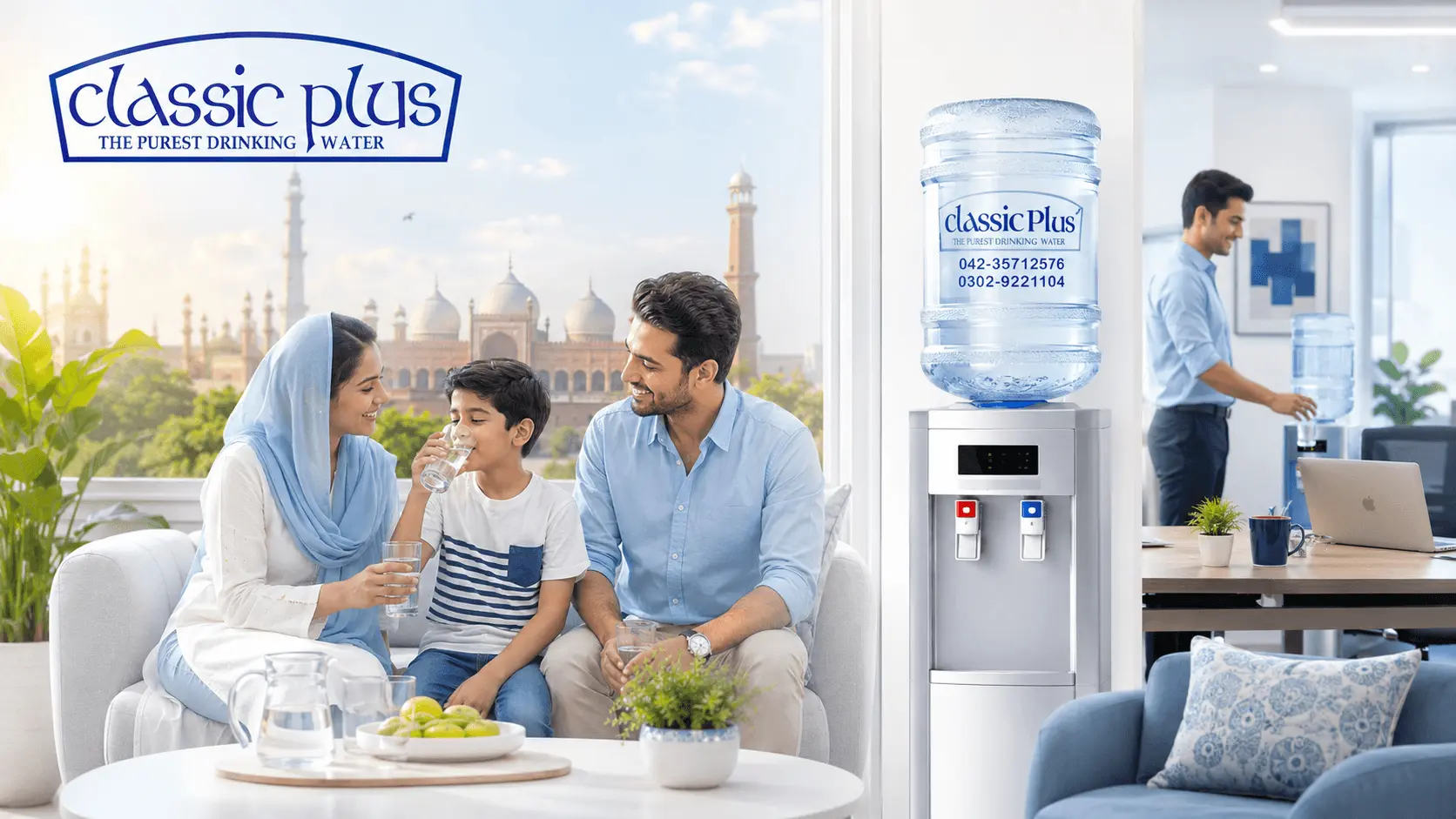
Check your weekly bottle estimate before delivery
If you want to understand how Classic Plus explains water quality in simpler terms, the standards page gives a clearer view of handling, cleanliness, and practical drinking-water checks.
Why hydration habits matter more in Lahore summer
Lahore summer changes the way people drink water. Longer hot days, traffic, office hours, school routines, and time spent indoors without enough fluids can all quietly reduce hydration. Many people notice thirst late, after they are already tired, uncomfortable, or less focused than usual.
That is why good hydration is not only about drinking a large amount at once. Better habits usually come from steady intake through the day, easier access to clean water, and a routine that fits real life instead of ideal intentions.
Safe drinking water is about routine, not only source
People often discuss safe water as if the only question is where it came from. Source matters, but so do storage, dispenser hygiene, bottle handling, and how the water is used after it reaches a home or office. A trusted source can still lose value if everyday handling is careless.
In practical terms, safer drinking-water habits mean keeping the dispenser area clean, avoiding unnecessary contact with bottle openings, and making sure water stays part of a predictable routine rather than an afterthought.
- Keep dispensers and bottle-contact surfaces clean
- Store bottles in a cool indoor place away from heat and direct sunlight
- Avoid leaving water uncovered or exposed unnecessarily
- Replace refills before the routine becomes rushed or irregular
Children, older family members, and office teams feel the difference first
Some groups are affected more quickly when hydration slips. Children may get busy and drink less than they need. Older family members may not always feel thirst strongly enough to respond early. Office teams often delay water during meetings, desk work, or long indoor hours.
This is why a visible and dependable drinking-water setup matters. When clean water is easy to reach, people are more likely to drink it regularly instead of postponing it until discomfort starts.
Simple hydration habits that work better than reminders alone
Many people try to improve hydration by telling themselves to drink more water. That usually fades quickly. Better habits come from making water part of existing routines such as waking up, mealtimes, school preparation, pantry use, and breaks during work hours.
A household or workplace does not need a complicated health system. It needs a setup that makes regular drinking easier and safer every day.
- Start the day with water instead of waiting until late morning
- Keep drinking water visible in kitchen and pantry areas
- Encourage smaller regular intake instead of long gaps
- Review dispenser cleanliness as part of the weekly routine
The goal is healthier consistency
In Lahore summer, the best drinking-water habit is consistency. People do better when the water feels safe, tastes clean, and remains available without disruption. That combination supports healthier daily behavior more effectively than occasional reminders or short-term effort.
For homes and offices alike, safe drinking water is not only a product decision. It is part of a wider daily health routine built on access, cleanliness, and regular use.
Why do hydration habits matter more in Lahore summer?
Hot weather, longer days, commuting, and indoor routines can all increase water loss and make regular hydration more important than usual.
Is safe drinking water only about the source?
No. Source quality matters, but storage, handling, and dispenser hygiene also play a major role in keeping drinking water dependable.
Who is most affected by poor hydration habits?
Children, older family members, and busy office teams often feel the effects earlier because they may delay drinking or depend on others to keep water easily available.